Swimming in a Sea of Wildflowers

group shot.jpg

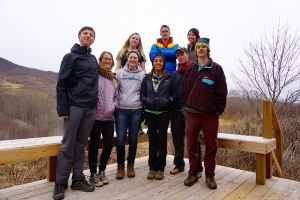
Photo taken by Ted Haddock

The forecast showed rain for Saturday’s wildflower hike on April 27, but even with the incoming deluge, ten rain-impervious souls showed up to enjoy a few of Spring’s fleeting treasures. The big rains were coming at two so we put on our water repelling soul-suits and set-off on our adventure.

Heading into the Haddock's property.jpg

Heading into the Haddock’s property

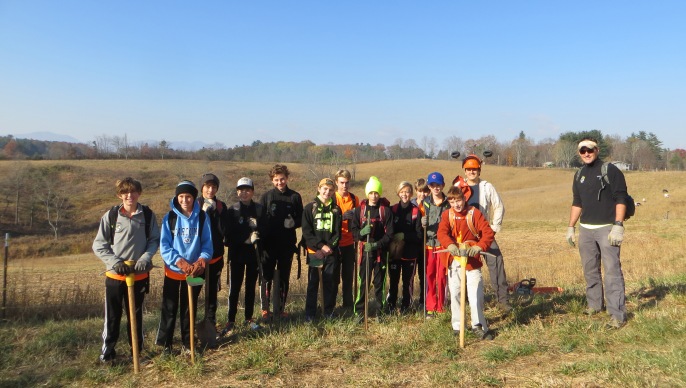
Off we went into the light drizzle, pausing only to take a group photograph as evidence that we were in fact outside and not identifying flowers from laptops in warm, cozy beds. Ted Haddock and his family generously offered their beautiful property as a place to search for spring ephemerals. Glancing up the mountain, the whole group knew we were in for a real treat! The climb was steep but Josh Kelly, Western North Carolina Alliance’s Public Lands Biologist, always had the knack to point out another cool flower or the call of a bird mocking us from far above when the group began to lose its breath.

Firepink.jpg

Firepink

Just on the logging road alone, on the way up to the rich cove forest, (diverse mixutre of moisture-loving trees and lush species-rich herbacious layer) we saw too many flowers to count. There were Firepinks, a trillion trilliums, Bishop Caps, Acolyte Avens (just kidding about that one), Gallium,violets, and plenty of the not-so-great, proliferating garlic mustard. We tasted the delicious seed pods of Solomons Seal. We met a Jack in the Pulpit. We met a Jill in the Pulpit and we learned that this androgynous plant changes its sex depending on the living conditions leading up to the plants sprouting. If there is enough rain, and the soil is full of plentiful nutrients, the plant sprouts as a female, Jill in the Pulpit, and is able propagate. If conditions are not as accommodating, the plant sprouts as a Jack in the Pulpit, the male version of the plant.

Jill in the Pulpit.jpg

Jill in the pulpit

Max Patch.jpg

Max Patch in the distance

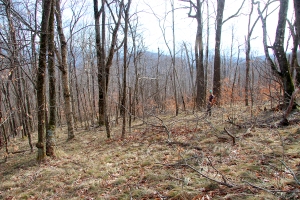
Towards the end of the climb, the group was rewarded with a nice view of Max Patch in the distance and still, the great rains had not moved in…yet.

But oh did they come! We took a wildflower break to eat some lunch. After no more than three bites of my savory Subway sandwich, the skies opened  up, causing us to scarf down our grub and head to the wildflower Promised Land. The rich cove that Josh led us to was truly spectacular. The flowers we saw on the logging road were only a small sample size compared to the smörgåsbord that littered the cove. By the time we made it back to road, even the best rain gear was taking in water. Back at the Trust General Store were piping mugs of hot chocolate waiting for us. Whaddaday!

A big thanks to the Haddock Family for letting us explore their beautiful property and to Josh Kelly for sharing his vast knowledge of wildflowers and plants with the group. And lastly, thanks to everyone that came out to frolic in the rain with SAHC. It was a special day!

Categories: Hikes | Leave a comment

NC Land and Water Conservation Lobby Day

Legislative Building in Raleigh

Legislative Building in Raleigh

What is “Lobby Day”? An opportunity for us to show our elected officials how important land and water conservation are to our state.

Land for Tomorrow, a partnership of concerned citizens, businesses, interest groups and local governments, organized the statewide lobbying efforts. This past Wednesday, March 27, SAHC staff members Pauline Moleski and Michelle Pugliese, and  former trustee Jay Leutze joined other representatives from North Carolina land trusts for NC Land and Water Conservation Lobby Day in Raleigh. Our elected officials heard from us on the importance of state conservation funding and why we need their support to increase funding to our four conservation trust funds.

Gov. Pat McCrory unveiled his proposed budget last week, which made significant cuts to land and water conservation. The proposed budget cuts the Clean Water Management Trust Fund (CWMTF) to $6.75 million from $10.75 million last year (down from typical annual appropriation level of $100 million since its founding has been slashed 94% since the beginning of the economic crisis) and including funding only in eh first year of the biennium. The budget also reduces the Parks and Recreation Trust Fund (PARTF) to $15.5 million, down from $27.5 million, a 44% cut. And, it reduces the Natural Heritage Trust Fund (NHTF) to $4.23 million from $9.9 million, a 58% cut. While these cuts are difficult, the most concerning part is that it removes the dedicated source of funding for PARTF and NHTF. Presently these two funds come from a percentage of the real estate deed stamp tax and personalized license plates; however the proposed budget would direct that money to the state’s general fund and return only a percentage back to PARTF and NHTF.  Given the long-term nature of land acquisitions, this leaves no reliable funding to plan for long-term land acquisition projects.  The budget maintains the current funding level of the $1.7 million per year for the Agricultural Development and Farmland Preservation Trust Fund.

Why are we so concerned? North Carolina’s four conservation trust funds are at serious risk. These funds have successfully invested in preserving our state’s unique natural areas, and have boosted economic development throughout North Carolina – including our scenic Western North Carolina area, where droves of visitors to our parks, forests and rivers bolster local economies each year. As decisions are made about continued investments in conservation funding, critical projects are at stake. If adequate funding is not provided, North Carolina will lose these valuable resources. Land and water conservation supports all of our major economic drivers – the military, tourism, hunting/fishing/recreation and agriculture. It also lessens the local tax burden by reducing expenditures.

Without sufficient conservation funding, critical projects will be lost.

The positive news is that the Governor’s proposed budget will be revised by the Senate and then the House before it is approved. We spoke with representatives from our local counties and asked that they work with their leadership to help us continue the state’s economic recovery by:

  • Funding the Clean Water Management Trust Fund at $20 million recurring in each year of the biennium.
  • Maintaining a dedicated source of funding for the Parks and Recreation and Natural Heritage trust funds.

Please consider contacting your local representative and also requesting these simple funding requests. Conservation isn’t about pretty views or rare plants; it is about people and the economy. We know that for every dollar spent from the state’s conservation trust funds, North Carolinians receive $4 in natural goods and services – things such as flood control, productive farmland, clean water and clean air.

Furthermore, protecting high quality water resources through conservation is four times more cost effective that treated contaminated water.  Saving land saves water and money.

Categories: Uncategorized | Leave a comment

Moody Knob – Quiet Cove with Devoted Stewards

Jack in the pulpit.

Jack in the pulpit.

This lovely 63-acre cove is located in Madison County, on the ridgeline that is the border with Buncombe County. It lies near other properties that we have protected in a relatively unfragmented corridor between the Black Mountains and the Tennessee line.

The tract is a north-facing rich cove with large hardwood trees, a diverse herbaceous layer, and multiple seeps and springs. Headwaters originating on the property flow into Terry Fork, a tributary of Ivy Creek that meets the French Broad River just south of Marshall.  An botanist’s inventory conducted noted 158 plant species, and the property is one ridge over from the Black and Craggy Audubon Important Bird Area.

White-spotted slimy salamander on the Moody Knob tract.

White-spotted slimy salamander at Moody Knob.

Owning a special property heightens your personal connection with the land. This intense connection led landowners Hershella Smith and Jay Gleason to donate a conservation easement on their beloved Moody Knob property. With a true sense of commitment to stewardship, the landowners generously donated the entire value of this conservation easement and all transaction costs to make this project possible.

Moody Knob: A Landowner Perspective

by Hershella Smith

“For as long as I can remember I’ve wanted to purchase a great piece of land and build a house. By the time I found the right tract of land in 1996 and arranged financing to purchase it, I had grown to believe that being a good steward of the land was as important as being a land owner. So my commitment when I purchased the Moody Knob property was to ensure that it would never be developed or logged.

Hershella Smith shows SAHC Land Protection Director Michelle Pugliese around Moody Knob.

Hershella Smith shows SAHC Land Protection Director Michelle Pugliese around Moody Knob.

I wanted to wait until I had paid off the loan to place the conservation easement. Meanwhile, I got to know the land that I had initially fallen in love with – where I would find the biggest trillium in the spring, what color the hickory leaves turned in the fall, which patches of ground kept snow the longest. I learned a lot — not the least of which was how challenging it sometimes was to keep the interests of the land above my own.

Now, with the loan paid and married to a man who shares my love for the land, I am intensely pleased that we are able to put the land into conservation. I feel a huge sense of gratitude toward SAHC, a sense of accomplishment in finally honoring a commitment made many years ago, and a sense of relief and joy in knowing that our land isn’t just  ‘our’ land any longer. It belongs to itself.”

Categories: Uncategorized | Leave a comment

Grassy Ridge – Success 40 years in the making!

Contextual aerial photo of the Grassy Ridge tract, showing publicly accessible points in the landscape. Flight provided by Southwings.

Aerial photo of the Grassy Ridge tract, showing publicly accessible points in the landscape. Flight provided by Southwings.

At the end of 2012, we succeeded in purchasing an incredible property that had topped our conservation priority ‘wish list’ for the past four decades — the 601-acre Grassy Ridge tract, crown jewel of the Roan Highlands. Thanks to tenacious landowner outreach, good timing, extraordinary support from private philanthropists, and critical conservation partnerships, we were able to ring in the New Year with a triumph truly worth celebrating.

The Grassy Ridge tract forms a breathtaking corridor that connects public lands along one of the highest elevation ridges in the Southern Appalachians.

“Since SAHC’s beginning, the protection of the Grassy Ridge Tract has been a top priority.  There is still much more to be done, but we can all rejoice that this important tract is now protected forever,” said Carol Coffey, former president of the Board of Trustees. “The purchase of the Grassy Ridge tract is a milestone in SAHC’s efforts to protect the Southern Appalachian Highlands.”

The Grassy Ridge tract forms an important corridor between National Forest lands to the north and NC state-owned protected land to the south.

The Grassy Ridge tract forms an important corridor between National Forest lands to the north & NC state-owned protected land to the south.

The tract has been considered a top priority for SAHC and other conservation partners in the region for decades because of its size and location within a large network of high elevation protected lands.

“The Grassy Ridge Tract is one of the few parcels of private land in the Eastern United States that rises above 6000’ elevation, and it is the only such tract near the Appalachian National Scenic Trail,” said Joe DeLoach of the Tennessee Eastman Hiking & Canoeing Club and former SAHC president. “With the ridge lines visible from the AT, and with it forming the eastern boundary of Grassy Gap which is highly visible from the AT on Round and Jane Balds and which serves as a key connector between the main crest of the Roan Highlands and the Yellow Mountain State Natural Area, purchase of this tract will protect the experience and enjoyment of an undeveloped landscape for the many hikers who consider the Roan Highlands as one of the most scenic areas along the entire Appalachian Trail.”

At its northern boundary, it takes in the crest of Grassy Ridge where it joins Pisgah National Forest, and at the southern end the property joins tracts owned by the State of NC in the Yellow Mountain State Natural Area. It lies in the view shed of the Appalachian Trail, visible from the Overmountain Victory National Historic Trail and other locations in the Highlands of Roan.

High elevation meadows on the tract form a large swath of prime bird habitat.

High elevation meadows on the tract form a large swath of prime bird habitat.

The property consists of a large, forested bowl within three ridges: Grassy Ridge, Big Roan Ridge, and Martin Ridge. One of the largest concentrations of rare species and communities in the state are found on Grassy Ridge and the adjoining habitats of Roan.

“Nearby Grassy Ridge bald is the best remaining and most pristine grassy bald in the Southern Appalachians,” said Judy Murray, SAHC Roan Stewardship Director.  “This bald and its adjacent rock outcrops have the highest concentration of rare plant species and the fewest non-native species of any site in the Highlands of Roan.  SAHC has been a lead partner in restoring and maintaining Roan’s grassy balds for over 20 years, and the purchase of this tract is a major achievement in protecting this globally endangered ecological community.”

The Roan Mountain Important Bird Area and the Roan Massif Significant Natural Heritage Area cover the property, and hundreds of acres of high elevation old fields on the tract form a large swath of prime bird habitat.

streamongrassy

Protection of the Grassy Ridge property secures pristine headwater streams that feed into the North Toe River watershed.

This purchase permanently protects pristine water quality as well as globally significant plant & animal habitat. Headwater tributaries of Roaring Creek, a beautiful wild trout stream, originate on the property and flow into the North Toe River watershed.

We seized a small window of opportunity to successfully complete this project at the end of the year, made possible through extraordinary support from private philanthropists and critical loan funds obtained from the Open Space Institute.

“The Open Space Institute is pleased to once again support conservation in the Greater Roan Highlands Landscape,” said Peter Howell, OSI’s executive vice president. “The protection of the Grassy Ridge tract preserves a highly significant wildlife corridor between Little Yellow Mountain and the highest summits of the Roan Massif. We salute SAHC for its persistence and personal interaction with so many of the people involved in this project. It was SAHC’s perseverance that made this deal happen.”

Over the past six years, OSI has assisted SAHC and other partner agencies in the protection of 1,500 contiguous acres that are part of an important wildlife corridor between the two spines of the Southern Blue Ridge ecoregion.

Funds that secure the OSI loan are held in the Long View Endowment at the Community Foundation of Western North Carolina, a regional nonprofit serving 18 counties.

“We are proud of our work with SAHC and with donors who care about conservation,” said Sheryl Aikman, the Foundation’s vice president for development. “The Long View Endowment was created by a donor, now deceased, who understood SAHC’s work
and mission and structured her legacy for just this type of opportunity.”

SAHC will offer guided hikes on the Grassy Ridge tract and other protected land in the Highlands of Roan throughout the year. The organization will celebrate this recent accomplishment along with other land protection successes at our Appalachian Spring event on Thursday, May 16tth at the Barn at Allandale Mansion in Kingsport, TN.

“Our family takes great pride in having worked with SAHC from the beginning of this organization,” said Jeanette Blazier, former Kingsport mayor and current president of the SAHC Board of Trustees.  “The recent purchase of this key property on Grassy Ridge is another example of our commitment to preserving the beautiful mountains of our region.  It is especially significant since the founding members of SAHC had as their primary focus the preservation of the Highlands of Roan.”

Categories: Land Protection Updates | 1 Comment

Trail Building on SAHC’s Community Farm

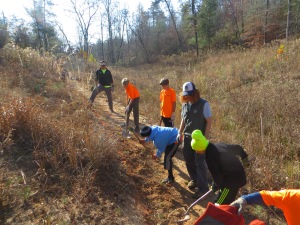
Trail work begins at the SAHC Community Farm in Alexander, NC.

Trail work begins at the SAHC Community Farm in Alexander, NC.

atTrucks

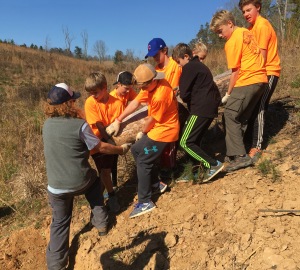
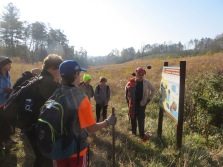
The crew received instructions prior to work.

Americorps - Go Team!

Volunteers assemble  – Go Team!

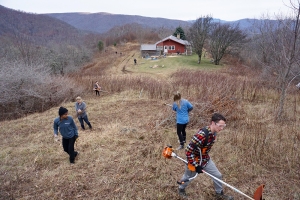
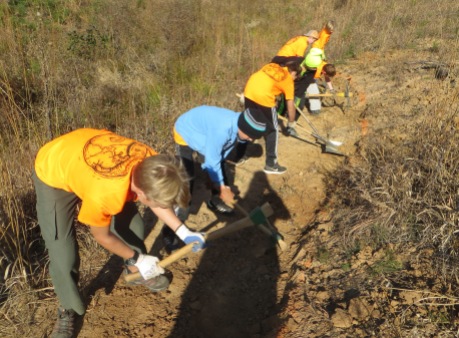
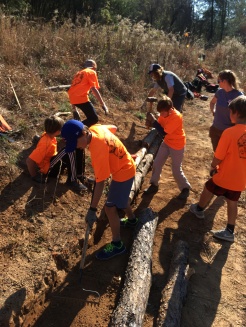
On a chilly mid-March day, SAHC’s Anderson Farm was host for an AmeriCorps service day. Fourteen AmeriCorps Project Conserve members, currently serving at host sites throughout Western North Carolina, came together on SAHC’s Community Farm to lend their hands in building a trail on the 100 acre property.

The SAHC Community Farm property lies just 15 minutes to the north and west of Asheville within the Newfound Creek watershed, an impaired waterway as identified by NC Division of Water Quality. Years of timbering and intensive cattle grazing have impacted the pastures, forests, and waterways of this property. Since acquiring the farm, SAHC has begun the process of revitalizing the agricultural and conservation assets on the property.

smallgroup1

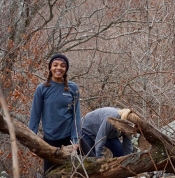
Americorps Project Conserve volunteers Margot Wallston, Laura Brookshire, and Serena Shah.

We are currently reforesting a clear-cut section of the farm with shortleaf pine, a declining species in NC, which will be used as a demonstration stand. We are also working to improve the agricultural management of the land and will eventually establish the property as a model farm for educational purposes.  A large stream restoration project will begin in the spring of this year and will result in significant wildlife habitat and water quality improvements. To utilize the property as an educational asset, we have designed a trail that will highlight the many improvements being made to the farm, so that this special property may be shared with the public.

Beautiful weather for trail work.

It was a nippy day, but skies were clear  for trail work.

jamie

SAHC’s Americorps Land Protection Associate Jamie Ervin on the farm.

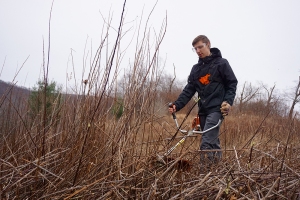
AmeriCorps Project Conserve members, along with SAHC staff, broke ground on the first section of trail to be built on the farm. This section of trail runs from the trail head, through the shortleaf pine restoration area, and down to the stream restoration area. Along the way, the trail traverses through heavy brush and tree re-growth, so the trail work involved cutting back blackberry and grasses to the ground with loppers and small hand saws, breaking ground with pulaskis (tools with a head shaped with an ax blade on one side and an adze on the other) to form the foot path, and grading the trail to create a finished surface for walking.

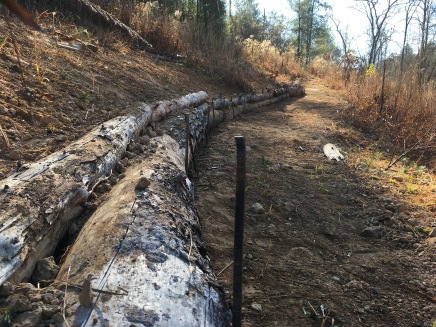
A great start for our interpretive trail.

A great start for our interpretive trail.

Using pulaskis to break ground.

Using pulaskis to break ground.

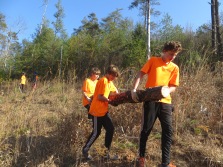
Several AmeriCorps members present at the workday are experienced sawyers, and SAHC was fortunate to have use of their skills for the removal of Virginia Pine (Pinus virginiana) . Removing the Virginia Pine will allow the Shortleaf Pine (Pinus echinata) that is already on the Anderson Farm to flourish and will make the restoration of this declining plant community possible. While Shortleaf pine is common to the Southeast’s piedmont and mountain regions, it is in decline in North Carolina.

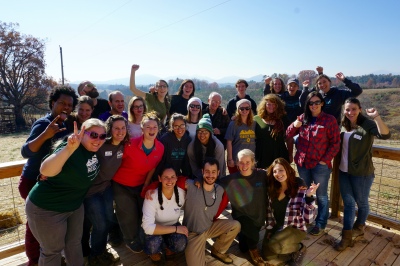
Americorps volunteer team.

Huge thanks to all the team members who volunteered!

It was wonderful to have had so many talented and hardworking AmeriCorps Project Conserve members give the gift of their time and energy to SAHC and the Anderson Farm. While the trail work was slower going than anticipated, the work day was a great success. We accomplished a substantial part of the trail building and removed competition trees from about 2 acres of the property. The interpretive trail will be a key educational tool in allowing SAHC to share the efforts being made to restore the Anderson farm – as we make strides to improve the conservation and agricultural values back to the land. We plan to schedule additional volunteer work days on the farm throughout the Spring and Summer. Contact Allison Kiehl at 828.253.0095 ext. 203 for more details.

Categories: Volunteer & Stewardship Activities | 1 Comment

Devil’s Britches and Bark, Buds, Nuts – A pint, a party, a presentation and hike for Tree ID.

DevilBritches_merchtable

SAHC staff & volunteer manned our merchandise table at the Tasting Room. It was a good place to meet friends – new & old!

Music from the Log Cabin Band - put us all in the mood to learn more about our mountains.

Music from the Log Cabin Band – put us all in the mood to learn more about our mountains.

The end of February was a great time to practice winter tree identification, and to enjoy a new Highland Brewing Company seasonal pint with friends. As part of our “For Love of Beer & Mountains” partnership with Highlands Brewing Company and the US Fish and Wildlife Service, we hosted an informative & engaging presentation at the Tasting Room on Thursday, February 21, followed that weekend by an on-the-ground field opportunity with SAHC Field Ecologist Chris Coxen.

The Tasting Room was packed

The Tasting Room was packed

We enjoyed an incredible crowd at the Tasting Room; it was packed with people who came to learn more about winter tree identification, and to celebrate local music. Listening to the Log Cabin Band play before & after our tree ID tips presentation, we were reminded how deeply our rich Appalachian history and culture are tied to the trees and mountains surrounding us. It was an excellent place to learn – a lively setting, and a fun time!

The presentation was short & sweet – an informative beginner’s guide to success in knowing more about the trees you may see in our area, given in six steps.

Step #1 - Have a good field guide - and two or more is better than one!

Step #1 – Have a good field guide – and two or more is better than one!

Step 1: Have a “good” field guide with you such as the National Audubon Society or Peterson Field guide.

Step 2: Try to identify your forest community type by narrowing down the possibilities of which trees grow where. For example, learning which trees grow at a particular elevation, observing whether the slope is north or south facing, or notice what the trees are near such as water, a hollow, or cove. The location of the tree relative to its surroundings is good way to determine which type of tree might grow there.

Step 3: Observe the form of the tree–are the branches opposite or alternating? Is the tree super straight like a tulip poplar? Is it bent like a sourwood?

SAHC Field Ecologist Chris Coxen makes winter tree ID accessible, and fun.

Step 4: Hark, the bark! Is the bark cobbled like sourwood or black gum? Are there grooves that look like ski trails (might be a red oak)?

Step 5: Checkout the leaves and fruit around the tree. Chris pointed out that this technique can back your initial inclination but is not always reliable because the leaves/fruit could fall far from the tree and because some leaves persist better than others.

Step 6: Examine the twig. When this technique is combined with step 2 and 4, the observer has the best chance of identifying the given tree.

The following Sunday, a full group headed out on a guided hike at Cataloochee Ranch, to try out newly learned techniques.

Sunny Day.jpg
Heading to the Devils Britches with Hemphill Bald in the Background

Woooooo-weeee! SAHC Field Ecologist, Chris Coxen, was on fire, “ID-ing” trees left and right on the Devils Britches Trail at Cataloochee Ranch. It was a clear & beautiful day, filled with learning, mountains, and the tasty Devils Britches Red IPA from Highland Brewing Company.

The hike started with a discussion about how conservation easements work and the Southern Appalachian Highlands Conservancy’s long history with Cataloochee Ranch. This talk was especially fitting, since we placed our first ever conservation easement here at the Ranch –  on Hemphill Bald in 1993.

Once reaching the edge of the forest, our schooling started by looking at forest community types.

Chatting.jpg
SAHC Field Ecologist, Chris Coxen, chatting about trees at the beginning of the hike

“One of the best ways to identify trees without their leaves is to look for common forest communities,” said Chris.

Northern Red Oak.jpg
“Ski trails on the Northern Red Oak”

For example, dominant canopy species in Northern Hardwood Forest might include yellow birch, sugar maple, American beech, red maple, sweet birch, and yellow buckeye. Another common forest community type in western North Carolina is the Chestnut Oak Forest which includes trees like the northern red oak, chestnut oak, and scarlet oak. The question is how do you discern a chestnut oak from an American beech when the trees have no leaves?

Cobbled bark on a Sourwood tree

Cobbled bark on a Sourwood tree

Chris reviewed his Six Step tips for success with Tree ID, and for the next two hours, hikers had the opportunity to try out all six of the steps. The group quickly discovered that identifying the naked tree in the middle of winter can be a difficult task. After a pop-quiz from the Field Ecologist at the end of the hike, it was clear that the group had improved a lot. By lunchtime the weather had warmed up nicely and everyone enjoyed a refreshing Devils Britches Red IPA courtesy of Highland Brewing Company.

Thanks to everyone that came out, and we’ll look forward to seeing folks for the next partnership hike to Little Hump on Saturday, May 18th.

About our “For Love of Beer & Mountains” Partnership:

Groupshot.jpg

Hikers enjoy a Devils Britches Red IPA over lunch

Highland Brewing Company has partnered with the Southern Appalachian Highlands Conservancy and the U.S. Fish & Wildlife Service to help raise awareness of the beauty and uniqueness of these high peaks and bring attention to efforts to protect them. These events are presented as part of this partnership, and each is free and open to the public.

Categories: Special Events, Hikes | Tags: , , , , , | 1 Comment

Hiking in the Rough Creek Watershed: A respite from winter’s cabin fever.

Margot Wallston, SAHC Americorps Stewardship Associate, gives a sumac smile on the trail in the Rough Creek Watershed

Margot Wallston, SAHC Americorps Stewardship Associate, gives a sumac smile on the trail in the Rough Creek Watershed

“After several weeks of desk time at the office, followed by several days experiencing the worst that this year’s flu season had to offer, cabin fever prompted this SAHC AmeriCorps steward to take advantage of a free Sunday to pay a visit to one of our protected properties in Haywood County, only 30 minutes west of Asheville: the Rough Creek Watershed.

Rough Creek Watershed is an 870-acre conservation easement held by the Clean Water Management Trust Fund, co-managed with  the Southern Appalachian Highlands Conservancy, and owned by the Town of Canton. SAHC was instrumental in the protection of this Smoky Mountain jewel. The watershed, which drains into Beaverdam Creek, and then into the Pigeon River, used to serve as the primary water source for Canton, but now it primarily functions as a nature preserve and public pie slice of undisturbed open space.  One of the cool things about this particular conservation easement is that it is accessible to the public. The watershed contains approximately 10 miles of well-maintained trails open for conservation-conscious hikers and bikers to explore.

On the day I visited Rough Creek, the temperature was supposed to get no higher than 33 degrees, the wind had to be at least 30 miles per hour, and I had barely moved my body since getting trounced by the flu. However, I was determined to make the climb up to the ridge on the western boundary of the property, where I knew I would be rewarded with panoramic views of the Newfound Mountains. I was hoping this hike would serve as a warm-up for our ambitious spring monitoring season, which includes visiting 63 conservation easements in about three months.

Winter is a fun time to go hiking. It may seem like a cold and dead time of year, but signs of life are everywhere.  I think you can observe more because there is less green growth to obscure everything.  I can see landforms better and distinguish between tree species by looking at bark and twigs.  Animal tracks persist in the snow and remnants of last year’s herbaceous plants linger like forensic evidence at the scene of a crime.

Margot mimicking a stately old oak on the trail.

Margot mimics a stately old oak on the trail.

After hiking steadily upwards for approximately 2 miles, I did reach the ridgeline; and I was almost blown away and blinded by the piercing wind, the bright sun reflecting off a thin layer of snow at my feet, and the stunning views before me!  After pausing a moment to mimic a big lone oak tree, I continued along the ridgeline and was delighted to spy yet another sign of seasons past: brilliant red clusters of sumac berries.

Wild sumac (Rhus typhina or Rhus glabra, not to be confused with poison sumac, Toxicodendron vernix) is always a fun plant to encounter when hiking not only because its appearance is so striking, but also because it’s like stumbling into an outdoor pharmacy with a soda fountain and a candy section!

Enjoying a wild sumac lollipop.

Enjoying a wild sumac lollipop.

Sumac on the ridge, with spectacular views and a thin blanket of snow.

Sumac on the ridge, with spectacular views and a thin blanket of snow.

If the berries aren’t too old and it hasn’t rained recently, you can lick the red cluster cone like a lollipop.  The berries are covered with a sweet and tangy fuzzy coating reminiscent of a SweeTART.  The taste is due to a concentration of malic and ascorbic acids (Vitamin C).  Sumac was used by the Cherokee and continues to be used by herbal medicine aficionados for treating everything from cold sores to diarrhea to diabetes, fever, and arrow wounds.  My favorite thing to do with sumac is to soak the berries in a glass of cold water, which quickly transforms into a refreshing tea similar to pink lemonade. The berries are normally best after they ripen in late summer, but the ones I encountered on the ridge persisted through February and still held their flavor.

A refreshing sumac beverage.

A refreshing sumac beverage.

My hike continued for another 5.5 miles through a quiet forest laden with hidden richness and treasures.  Days later, I am so delighted that places like the Rough Creek Watershed exist close to my home; I feel blessed to have had the opportunity to come to know them and appreciate them; and I am so thankful that organizations like SAHC work with passionate  community members to protect these place for everyone to benefit from.”

Categories: Hikes | Tags: , , , , , , | 1 Comment

Blue Ridge Pastures in Fairview, NC

New Conservation Easements on Blue Ridge Pastures Protect 120 Acres

Hickory Nut Gorge, viewed from Blue Ridge Pastures.

Hickory Nut Gorge, viewed from Blue Ridge Pastures.

There is something invigorating about sunshine on early spring pastures in the mountains.  With the sun shining brightly down, and the ridgelines of the Hickory Nut Gorge looming above, you might just feel inclined to twirl and sing a little “Sound of Music,” or plant down your feet to do some yoga.

This past December, SAHC completed bargain sale conservation easements on two adjoining tracts at Blue Ridge Pastures, totaling 120 acres. The property is situated on the Eastern Continental Divide, adjacent to Strawberry Gap and Ferguson Knob, with an upper elevation of 3,740 feet.

The tracts are adjacent to a network of protected land in Hickory Nut Gorge, including SAHC’s Hickory Nut Gap Forest conservation easement and the Florence Preserve.  The Blue Ridge Pastures project also adjoins property protected by another SAHC conservation easement project completed in December – the Hickory Nut Gap Scenic Byways project.

Portions of the Blue Ridge Pastures property are visible from Little Pisgah Mountain, Bearwallow Mountain, the Craggy Gardens Visitor Center on the Blue Ridge Parkway, and Drover’s Road Scenic Byway. Protection of the tracts will also protect scenic views from these public destinations.

Catawba rhododendron on the Blue Ridge Pastures property.

Catawba rhododendron on the Blue Ridge Pastures property.

In addition to preserving view sheds, the Blue Ridge Pastures conservation easements forever secure clean water sources and wildlife habitat. Pristine headwater tributaries originate on the property and flow into Hickory Creek, a tributary of the Broad River that flows into Lake Lure. Diverse habitats on the property include understory plant communities that support a range of native species, and the Chimney Rock-Hickory Nut Gorge Important Bird Area covers the entire property. Important Bird Areas are designated by the Audubon Society as sites that provide essential habitat for bird species.

The open pasture at the top of the property forms habitat favored by some migrating song birds.

The open pasture at the top of the property forms habitat favored by some migrating song birds.

Some migratory songbirds especially favor the most notable feature of these conservation easements – the open pasture at the top of the tracts. Long-range views of Hickory Nut Gorge and the Swannanoa Mountains are visible from here, and the open pasture provides a perfect setting for SAHC’s outdoor adventures, connecting people with nature.

Fall 2012 hike group - an intrepid bunch of hikers who explored Blue Ridge Pastures after dusk.

Fall 2012 hike group – an intrepid bunch of hikers who explored Blue Ridge Pastures after dusk.

Last fall, SAHC conducted a “night hike” to the pasture, guided by environmental educator Alexandra Meyer. Intrepid hikers started off on an old roadbed trail just before sunset, ascending in elevation as night fell. Voluntarily giving up flashlights, the group used night vision and other senses to experience the trail after dark. SAHC is planning a similar adventure this fall.

The night hikers used night vision, and special red lights when necessary, on this fall excursion led by environmental educator Alexandra Meyer.

The night hikers used night vision, and special red lights when necessary, on this fall excursion led by environmental educator Alexandra Meyer.

One of the major incentives for doing these new Blue Ridge Pastures conservation easements is a proposed regional trail network, which will connect publicly accessible hiking trails in the Fairview area with trails in the Hickory Nut Gorge.

“My extended family is so pleased to be a part of the new Hickory Nut Gorge Trail system, and protecting the Blue Ridge crest on the back side of Hickory Nut Gap Farm,” said landowner John Ager. “We also want to thank the SAHC extended family for a lot of hard work, and the multiple donors that made the transaction possible.”

Sunset at Blue Ridge Pastures.

Sunset at Blue Ridge Pastures.

This proposed regional trail could connect the Florence Preserve, Tater Knob, Ferguson Knob, and Bearwallow Mountain, and eventually extend all the way to Chimney Rock State Park to increase public access to outdoor recreation destinations. The proposed trail system would be made possible through collaboration between landowners and conservation organizations. The new Blue Ridge Pastures conservation easements would provide for public access only on the regional trail, but not on the remainder of the Blue Ridge Pastures property. As with all conservation easements, the landowners will retain ownership of the tracts.

On April 28, SAHC will lead a yoga hike-and-class on the Blue Ridge Pastures property, instructed by Kim Drye of Lighten Up Yoga and Here Now Yoga. For more information or to register for this event, please contact Rich Preyer at rich@appalachian.org or 828.253.0095 ext. 205.

Categories: Land Protection Updates | 1 Comment

Jay Leutze honored with the Order of the Long Leaf Pine

Jayaward_enews

Jay Leutze accepts the NC Order of the Long Leaf Pine on Monday, January 14.

If you’ve ever had the pleasure of hearing Jay Leutze eloquently speak about the rare diversity of botanical life in the Highlands of Roan, or belt out a melodic serenade with his conservation song, you can understand why he was recognized this past January with the prestigious Order of the Long Leaf Pine.

The Order of the Long Leaf Pine is the highest honor the governor can bestow on a North Carolina citizen. It is presented to individuals in recognition of a proven record of extraordinary service to the state.

Over the years, Jay has been an ardent supporter of conservation. He grew up hiking, camping, and exploring the fragile wonder of the Southern Appalachians.  In 2008, Jay helped pass state legislation authorizing the Yellow Mountain State Natural Area adjacent to the Highlands of Roan. He also stopped the proposed Putnam Mine, which would have devastated views from the Appalachian Trail in the Highlands of Roan. The story of this heroic battle is the topic of his book “Stand Up That Mountain.”

We are sincerely thankful for Jay’s ongoing, outstanding conservation work with SAHC!

Categories: The People Behind SAHC | Leave a comment

Protecting Scenic Views, Historic Lands, and Clean Water at Hickory Nut Gap

viewfromParcelA

View from recently protected parcel at Hickory Nut Gap.

We love the tranquil drive through Fairview along the Drover’s Road Scenic Byway. At the crest of Hickory Nut Gap, the sight of Sherrill’s Inn overlooking this scenic route recalls the 1800s, when the Flying Cloud stagecoach carried mail and passengers from Rutherfordton to Asheville, and herd drovers stopped here to rest before journeying on through the gorge.

Recognizing the historic and natural treasures of this area, we were thrilled to protect 173 acres along the Drovers Road Scenic Byway (US 74A) this past December, through conservation easements on three adjoining parcels. These conservation easements ensure that the land will be preserved forever, securing important views, habitat, and water resources right on the Eastern Continental Divide.

The three adjoining parcels are located on the Hickory Nut Gap section of the Drovers Road Scenic Byway (Highway 74A) in Fairview and are visible in the distance from the Blue Ridge Parkway.  The parcels also share a long boundary with our Hickory Nut Gap Forest conservation easement, and are close to and visible from the publicly accessible Florence Preserve and Bearwallow Mountain.

“Two sources of public funding plus private donors made this project possible,” said Michelle Pugliese, SAHC’s Land Protection Director. “We also very grateful to the landowners for their commitment to protect this incredible area on the Scenic Byway — an intersection of cultural, historical, clean water, and scenic resources.”

EasternContDividesign

New conservation easements protect views along the Drover’s Road Scenic Byway (74A), right at the Eastern Continental Divide.

The project was one component of a North Carolina Scenic Byways Land Conservation Initiative grant awarded to land trusts throughout the state to protect significant scenic, cultural, and historical assets along scenic byways. These new conservation easements reflect SAHC’s ongoing commitment to preserve resources along the Drover’s Road Scenic Byway.

The new conservation easements together preserve Tater Knob, one side of Ferguson Knob (the other side is protected by a previous SAHC conservation easement), and both sides of a section of Ashworth Creek, a beautiful, healthy stream passing through Fairview.

Preservation of Ferguson Knob, center, is complete with this project.

Preservation of Ferguson Knob, center, is complete with this project.

High quality Appalachian rich cove forest is located on a portion of the recently protected acreage.  Rich cove forest is a type of plant community found in narrow valleys, broad ravines and slopes where rich soil and abundant rainfall foster a diverse mixture of moisture-loving trees and herbaceous plants. The deeply shaded, rugged terrain associated with this plant community type is characterized by steep slopes, fallen logs, and scattered boulders, supporting a dense canopy of tall, mostly deciduous trees.

The second public funding source for this project was the North Carolina Department of Justice’s Environmental Enhancement Grant (EEG) program, which funded seven conservation projects in western North Carolina through Blue Ridge Forever’s Conserving North Carolina’s Mountain Headwater Steams Project.

“With two miles of headwater streams running across this property and flowing into the French Broad River basin, the long term impact of this conservation project on water quality is undeniable,” said Valerie True, coalition coordinator for Blue Ridge Forever. “Our mountain streams serve as a sort of water-fountain for the region, and projects such as this will have a lasting impact on clean drinking water across the southeast for generations to come.”

In the future, sections of these new conservation easements will become part of a regional trail being planned to connect public trails in the Fairview Valley and Hickory Nut Gorge area.

Categories: Farmland Preservation Program, Land Protection Updates | 1 Comment

Blog at WordPress.com. Theme: Adventure Journal by Contexture International.

Follow

Get every new post delivered to your Inbox.

Join 369 other followers